 Elevate Bottle
Elevate Bottle
Elevate Bottle
Choosing a reliable supplier can decide whether an outdoor water bottle survives one season or many years.
China’s leading manufacturers now combine food-grade plastics, stainless steel, UV stabilizers, durable coatings, and controlled molding processes. However, attractive samples do not prove long-term outdoor performance. A bottle may look excellent under showroom lights, then fade beside a sunny trail. That gap deserves careful attention.
Dr. George Wypych, a recognized polymer degradation specialist, has stated, “UV degradation is a surface phenomenon before it becomes a material failure.” His observation explains why serious suppliers test more than appearance. They examine color change, surface cracking, odor retention, impact strength, and seal performance after accelerated ultraviolet exposure.
This guide introduces China’s top 10 UV resistant outdoor water bottle suppliers. It considers production experience, material selection, laboratory testing, customization capability, certifications, and export reliability. The goal is to help buyers identify partners that can genuinely Enhance the UV resistance of outdoor water bottles, rather than simply add a marketing claim.
Look closely at the details. Ask how long bottles remain under simulated sunlight. Request test conditions, sample records, and resin specifications. Check whether the cap, gasket, printed logo, and bottle body receive equal protection. Weak points often hide around the lid.
No ranking is perfect. Supplier data can change, and public information may remain incomplete. That is an uncomfortable limitation. Still, transparent comparison creates a stronger starting point for purchasing decisions. The best supplier is not always the cheapest or largest. It is the one that can explain performance clearly, prove it consistently, and improve when testing reveals a weakness.
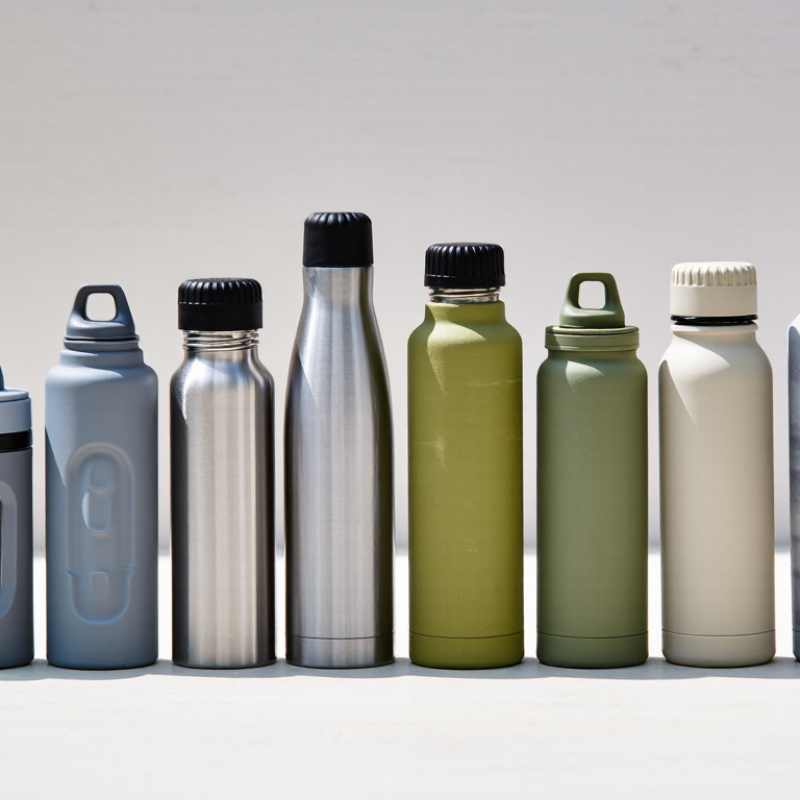
China Top 10 UV Resistant Outdoor Water Bottle Suppliers
What Makes an Outdoor Water Bottle UV Resistant
Outdoor bottles face sunlight, heat, dust, and repeated washing. UV resistance helps slow color fading, surface cracking, and plastic brittleness. It does not make a bottle completely UV-proof. That distinction matters.
The WHO, UNEP, and WMO Global Solar UV Index Guide classifies levels of 6–7 as high and 8–10 as very high. A bottle left on a sunny hiking trail may receive stronger exposure than expected. UV-stabilized polymers, light-blocking pigments, and opaque walls can reduce this damage. Clear materials usually need more careful formulation. Appearance alone proves little.
Material selection should be supported by testing, not supplier claims. ASTM G154 uses fluorescent ultraviolet lamps and controlled moisture cycles to compare weathering performance. ISO 4892-3 provides another recognized method for accelerated light exposure. These tests can reveal fading, cracking, and strength loss. However, laboratory cycles cannot perfectly copy alpine sun, tropical humidity, or daily abrasion. That limitation deserves attention.
A reliable outdoor water bottle supplier should disclose the resin type, UV additive approach, wall structure, and test conditions. Ask for color-change records and post-test impact results. In my experience, a dark bottle can hide early degradation. A pale, uneven surface may expose problems sooner. The better question is not “How long does it last?” but “Under which exposure conditions was it tested?”
| No. | UV-Resistance Factor | Relevant Material or Specification | Typical Technical Indicator | Why It Matters for Outdoor Use |
|---|---|---|---|---|
| 1 | Bottle Material | 304 or 316 stainless steel | Metal walls do not transmit sunlight into the liquid and are not degraded by normal outdoor UV exposure. | Stainless steel provides a strong barrier against UV transmission and is generally more durable than untreated transparent plastics during prolonged outdoor use. |
| 2 | Opaque Plastic Formulation | UV-stabilized HDPE, PP, or Tritan-type copolyester | Use of UV absorbers, hindered amine light stabilizers, or suitable pigments in the resin formulation. | A UV-stabilized polymer helps reduce discoloration, embrittlement, surface cracking, and loss of impact strength caused by sunlight. |
| 3 | Light-Blocking Color | Opaque, dark, or heavily pigmented exterior | Higher visual opacity generally provides better protection than clear or lightly tinted walls. | Blocking visible light and ultraviolet radiation can help protect light-sensitive beverages and reduce photochemical changes during outdoor storage. |
| 4 | UV Transmission Control | Measured transmission across the UV-A and UV-B ranges | UV-A is approximately 315–400 nm; UV-B is approximately 280–315 nm. Lower transmission indicates better light shielding. | A supplier should provide transmission data for the finished bottle wall rather than relying only on a general material description. |
| 5 | Accelerated Weathering Test | UV exposure testing for the finished component | Common laboratory references include ASTM G154 and ISO 4892-3 for controlled exposure of plastics and polymeric materials. | Testing can reveal color change, cracking, chalking, gloss loss, and mechanical deterioration before the product is used outdoors. |
| 6 | Mechanical Retention After UV Exposure | Impact strength, tensile strength, and leak resistance | Post-exposure results should be compared with unexposed control samples. | UV resistance is more meaningful when the bottle remains safe, impact-resistant, and leak-free after simulated sunlight exposure. |
| 7 | Surface Coating or Finish | UV-resistant powder coating, paint, or protective finish | Coating performance should include adhesion, abrasion resistance, and resistance to color fading. | A stable exterior finish protects the underlying material and helps maintain appearance during repeated exposure to sunlight and handling. |
| 8 | Cap and Seal Protection | UV-stabilized lid resin and food-contact-grade gasket | Inspect the cap, threads, silicone gasket, and hinge areas as separate components. | Small plastic and elastomer parts can degrade faster than the bottle body, causing brittleness, odor retention, deformation, or leakage. |
| 9 | Thermal and UV Combination | Resistance to sunlight, heat cycling, and outdoor temperature changes | Evaluate the bottle after combined UV, elevated-temperature, and repeated-use conditions. | Heat can accelerate polymer aging and may intensify the effects of UV exposure, especially in dark-colored bottles left inside vehicles or direct sun. |
| 10 | Supplier Quality Documentation | Material declarations, test reports, batch controls, and sample approval records | Documentation should identify the tested material, exposure conditions, test duration, acceptance criteria, and final results. | Traceable documentation helps buyers compare suppliers objectively and verify that the tested formulation matches the production bottle. |
Ask for material declarations, technical sheets, batch records, and recent laboratory reports. The reports should state test methods, exposure time, color change, cracking, and impact loss. “UV proof” is too vague. A polished claim proves little without measurements.
Food-grade stainless steel offers strong sunlight protection and resists odor retention. Clear copolyester can reduce weight and provide impact-resistant walls. Silicone seals need separate testing because sunlight may harden them. Material choice affects taste, weight, durability, and heat performance.
Fill the bottle with water and place it under strong sunlight. Repeat the exposure and washing cycles. Check odor, color, leakage, fading, cap warping, and thread wear. An empty shell may look fine. Filled tests reveal more.
Ask how the supplier controls resin batches, molding temperatures, wall thickness, and rejected units. Review mold maintenance, inspection frequency, leak testing, and inspection staffing. Measure several bottles from one sample batch. Weight differences may expose unstable processing.
Discuss bottle shapes, cap mechanisms, colors, measurement marks, packaging, and sample approval. Confirm color formulas and outdoor storage conditions in writing. Some suppliers outsource coating, which can weaken quality control. Printed details are not enough.
Request material declarations, migration testing, factory inspection records, and traceable batch information. Confirm food-contact and labeling requirements for the destination market. Keep current certificates and test records. Old documents may not describe current production.
Review monthly output, available molds, backup equipment, lead times, and staffing. A factory making many units monthly may still struggle with a smaller custom order. Shared production lines create delays. Capacity figures need context.
Put minimum order quantities, sampling costs, lead times, packaging protection, and replacement procedures in writing. Ask about pilot batches before approving large volumes. A low price can become expensive when cartons arrive late. I would allow time for retesting.
This guide explores what makes an outdoor water bottle resistant to ultraviolet exposure, including the role of UV-stable materials, protective coatings, color selection, and manufacturing controls. It also explains how to evaluate China-based suppliers by reviewing material quality, customization capabilities, product safety documentation, testing procedures, production capacity, lead times, and quality management systems. These factors are essential for developing bottles that remain durable, functional, and visually stable during extended outdoor use. Strategies to Enhance the UV resistance of outdoor water bottles are also discussed, helping buyers understand how design and production choices can improve long-term performance.
The article compares ten types of qualified suppliers according to their strengths in materials, customization, safety, and manufacturing scale. Finally, it provides a practical framework for selecting the right partner based on project requirements, order volume, target users, budget, delivery expectations, and desired product features. By using a structured evaluation process, buyers can reduce sourcing risks and choose a dependable supplier for high-quality outdoor water bottle projects.
